
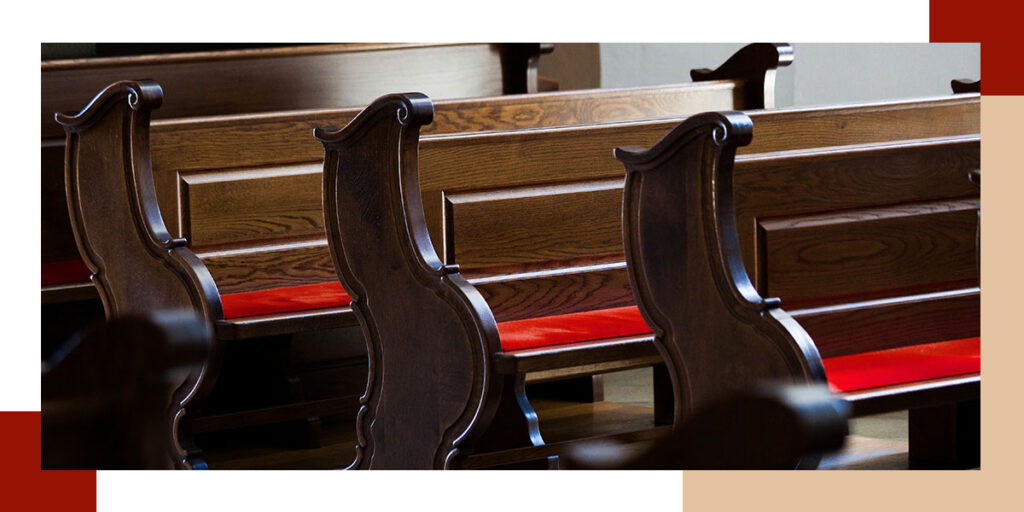
Your church pews provide much more than just seating. They connect your congregation to tradition and offer comfort during worship. However, even the highest quality seating can be vulnerable to wear and tear over time. Cushions begin to sag, stains become persistent and seating loses the welcoming feel it once had.
The challenge is knowing what to do about these issues. When does wear and tear call for a simple repair? When has damage progressed beyond fixing? As someone responsible for your church’s budget and preservation, you need clear answers to make the right choice.
Understanding cushion damage and the repair or replacement options will help you choose the solution that best serves your congregation.
Understanding Pew Cushion Damage and Its Causes
Identifying pew cushion damage early helps you make informed decisions before minor issues become costly expenses. Each type of damage tells you something different about the condition of your cushions and whether repair or replacement makes the most sense.
Common Signs of Damage
Look for the following issues when assessing your church pew upholstery:
- Surface and fabric issues: Fabric pilling occurs when fibers break down and form small balls on the surface. Fraying along edges, tears from sharp objects, punctures and staining all indicate fabric deterioration. Discoloration and UV fading are particularly common on cushions near windows.
- Structural and foam deterioration: Foam compression occurs when cushions no longer spring back after use. Sagging creates uneven seating surfaces, while crumbling foam leaves visible debris. When foam reaches the point of bottoming out, it has lost its resilience entirely and no longer supports its own weight.
- Attachment and hardware problems: Velcro failure allows cushions to shift during services. Loose attachment points create safety concerns. Zipper failures expose foam to accelerated damage, while welting or piping separation can compromise appearance and structural integrity.
Key Contributing Factors
Natural aging causes inevitable material breakdown. Standard commercial cushions deteriorate over time, depending on the original quality of the foam and fabric. Higher-quality materials extend lifespans, while budget options often fail faster.
Environmental influences accelerate wear, while sunlight exposure breaks down fabric fibers and fades colors. Temperature fluctuations cause foam to expand and contract, weakening its cellular structure. Humidity promotes mold and mildew growth in foam. Poor ventilation traps moisture and heat, compounding these problems.
Usage patterns and maintenance practices also play significant roles. High-traffic areas near aisles show wear faster than center seating. Frequent events with larger crowds can compress foam more severely, and cleaning products containing harsh chemicals can damage the fabric’s protective coatings. Improper maintenance techniques and excessive moisture during cleaning can penetrate cushions and promote deterioration from within.
Repair, Reupholster or Replace? Making an Informed Decision
Choosing between repair, pew reupholstery and full cushion replacement requires evaluating several factors. The right choice depends on the current condition of your cushions, your budget constraints and your long-term goals for the space.
Primary Cost Considerations
Understanding cost differences helps you make the most financially sound decisions. Repair costs depend on the extent of damage and the material quality. Labor requirements vary significantly based on whether you’re addressing surface fabric or deeper structural issues.
Reupholstery provides a middle ground, extending cushion life without the expense of complete replacement. Full replacement comes with higher up-front costs but delivers longer-lasting results, with updated comfort and style options. When comparing, consider both immediate and long-term value. Repair and reupholstery typically cost less initially but may need to be revisited sooner. Replacement requires a greater up-front investment, yet often proves more economical over several decades.
Repairs vary widely depending on scope, while replacement follows more predictable schedules. For churches with historic pews, preservation value matters significantly. Reupholstery maintains the original character, while replacement sacrifices historical authenticity for modern performance.
When Repair or Reupholstery Is the Best Choice
Several scenarios favor repair or reupholstery over full replacement, including:
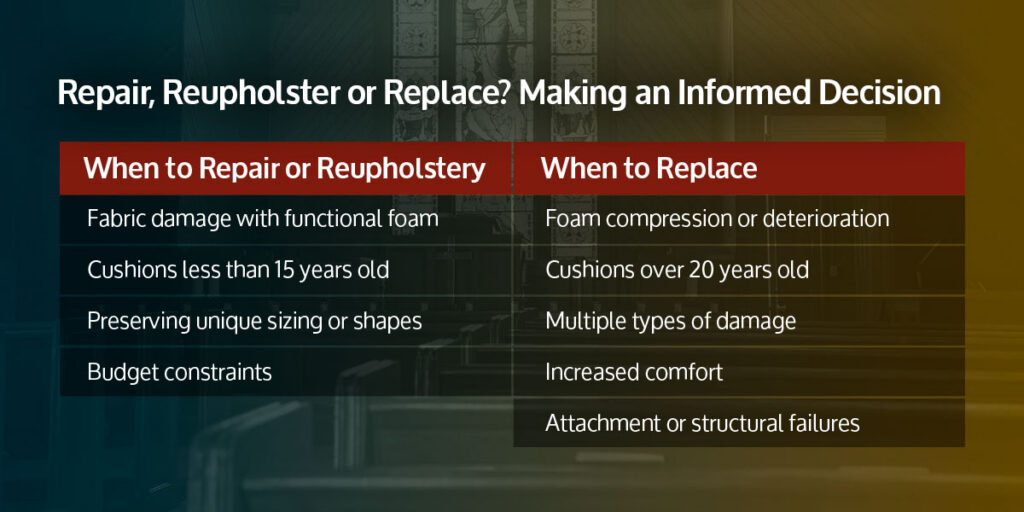
- Fabric damage with functional foam: If your foam still has solid structure and resilience, new fabric can help restore appearance and extend service life.
- Cushions less than 15 years old: Younger cushions with quality foam often benefit from reupholstery rather than replacement, particularly when damage is limited to surface wear.
- Preserving unique sizing or shapes: Historic pews often feature contours and profiles that are difficult or expensive to replicate. Reupholstery helps maintain these characteristics.
- Budget constraints: Repair allows you to address the most visible or problematic areas first, spreading out costs over time.
When Full Replacement Is Necessary
Certain conditions make cushion replacement the most practical long-term solution, including:
- Foam compression or deterioration: When foam has bottomed out or crumbles when touched, replacement is a better value than attempting to salvage damaged or aged foam.
- Cushions over 20 years old: Older cushions have typically reached the end of their useful life. Even if foam appears intact, its internal structure has likely degraded to the point that it is no longer reliable for service.
- Multiple types of damage: When fabric, foam and attachment systems all show significant wear, repairs can cost nearly as much as replacement.
- Increased comfort: Many of today’s cushion materials offer superior comfort and durability compared to options from decades past.
- Attachment or structural failures: When the cushion mounting system no longer functions properly, replacement addresses both cushion and attachment issues.
Extending the Life of Your Pew Cushions
Smart maintenance protects your investment, whether you’ve chosen repair, reupholstery or replacement. Proactive care prevents premature damage and significantly extends the service life of your cushions.
Value of Maintenance and Proactive Care
Prevention costs less than correction. Simple protective measures you implement now help avoid expensive repairs later. Regular attention to environmental factors and usage patterns helps cushions reach their full expected lifespan. Churches that utilize effective maintenance routines achieve much better results than those that address problems only after damage becomes visible.
Essential Protection Strategies
A few tips can help your facility get the most out of its pews. For example, UV protection is among the most effective preventive measures. Window films block harmful rays while allowing natural light to pass through, and strategically placing your pew cushions away from direct sunlight reduces fading and fabric breakdown. Consider rotating cushions periodically so wear distributes more evenly across all pieces.
Climate control provides optimal conditions for the longest lifespans. Consistent temperature prevents expansion and contraction cycles that weaken the foam structure. Humidity control between 40% and 60% discourages mold growth while preventing excessive drying, and adequate ventilation promotes air circulation while reducing moisture accumulation.
Proper cleaning products and techniques preserve protective fabric coatings. Use only pH-neutral upholstery cleaners, and avoid excessive moisture that penetrates the foam. Vacuum regularly to remove dust and debris before particles work into the fabric weave. Address spills immediately with blotting rather than rubbing motions.
Learn More About Pew Restoration With The Keck Group
The right decision about your pew cushions starts with an honest assessment. The Keck Group has spent over 40 years helping churches of all sizes protect their investments. We work directly with you from start to finish to evaluate your cushions, discuss your goals and recommend the most practical solutions for your situation.
We deliver quality craftsmanship, fair pricing and faster turnaround times than most providers in the industry. Request a quote to get a comprehensive assessment of your pew cushions, or contact us directly if you have questions about your specific needs.