
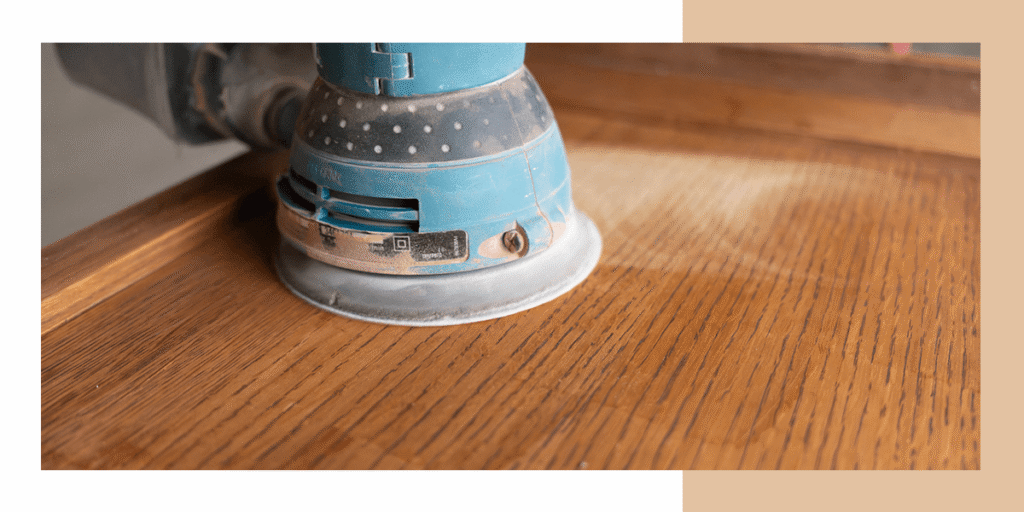
When church furniture shows signs of wear, decision-makers face a critical choice — refinish the existing pieces or replace them entirely. But beyond aesthetics and budget, there’s an increasingly important question to consider — is refinishing more eco-friendly than replacement?
For organizations committed to environmental responsibility, this question is increasingly relevant. Decisions about facility maintenance directly impact resource management and long-term sustainability. Refinishing delivers significant environmental benefits compared to replacement, from reduced carbon emissions to waste prevention.
Understanding the environmental impact of refinishing versus replacement helps church leaders make informed decisions that support responsible resource management while preserving the historical character and craftsmanship of their facilities. The answer is clear, and the data is compelling.
The Environmental Impact of Refinishing vs. Replacement
Recent research confirms what sustainability experts have long suspected — refinishing church furniture is dramatically more eco-friendly than replacement. When you choose to refinish rather than replace worn pews and church furniture, you make a decision that significantly reduces environmental harm across multiple dimensions.
Significant Reductions in Energy Use and Carbon Emissions
A December 2025 life cycle assessment conducted by IVL Swedish Environmental Research Institute examined the environmental impacts of refinishing versus replacement for wood surfaces. The findings were striking:
- Energy savings: Refinishing wood saves an average of 97% in energy use compared to replacement.
- Carbon emissions: Refinishing reduces carbon emissions by 89% for wood furniture.
- Global warming potential: Replacement has a five to 12 times higher impact on global warming than refinishing.
These percentages translate to substantial environmental benefits for church furniture projects. When you refinish church pews instead of replacing them, you avoid the energy-intensive manufacturing processes required to produce new furniture while achieving beautiful, durable results.

Reducing Furniture Waste in Landfills
The scale of furniture waste in America is staggering. According to Environmental Protection Agency statistics, approximately 12.08 million tons of furniture were generated in 2018, with 9.68 million tons ending up in landfills. Only 40,000 tons were recycled — representing less than 1% of total furniture waste. When furniture sits in landfills, it takes up valuable space, can leach harmful chemicals into soil and groundwater and contributes to long-term environmental degradation.
Church pew refinishing keeps quality furniture out of the waste stream entirely. Church pews are built with solid hardwoods designed to last for generations when properly maintained. Refinishing these durable pieces preserves their structural integrity while updating their appearance — eliminating waste rather than creating it.
Lower Manufacturing and Transportation Impact
Manufacturing new furniture demands significant natural resources and energy. A comprehensive life cycle assessment published in Nature Scientific Reports in 2025 found that the preproduction stage consistently accounts for the largest environmental impact across all furniture types. This stage includes raw material extraction, such as timber harvesting from forests, along with initial processing and material preparation.
When you replace church furniture, you create demand for new timber, contributing to deforestation pressures. Manufacturing processes consume substantial energy and generate emissions throughout production. Transportation adds another layer of environmental cost — shipping new furniture from manufacturers to your church requires fuel and produces carbon emissions.
Local professional refinishing services dramatically reduce transportation impact while eliminating manufacturing emissions entirely. The environmental benefits of refinishing extend throughout the entire life cycle of your church furniture.
Modeling Responsible Environmental Stewardship
Environmental choices reflect a commitment to responsible resource management. Decisions about church facilities offer an opportunity to demonstrate stewardship. Choosing sustainable facility management practices, such as refinishing over replacement, highlights a commitment to environmental responsibility and resource efficiency in all aspects of operations. When you select environmentally responsible options like church pew restoration, you demonstrate a commitment to maximizing the useful life of resources and minimizing unnecessary waste.
Preserving History While Protecting the Environment
Environmental benefits and historical preservation work together when you choose refinishing over replacement. This dual advantage makes refinishing especially valuable for churches with historic furnishings.
Maintaining the Traditional Character of Your Space
Church furniture often represents significant historical value and connects your community to traditions. Original craftsmanship in older church pews often represents quality and attention to detail that’s difficult to find in modern mass-produced furniture.
When you refinish rather than replace, you maintain a connection to the organization’s heritage while refreshing the appearance of your space. The connection between place, memory and tradition in worship spaces has a profound value that new furniture simply cannot replicate.
The Longevity Advantage of Refinished Furniture
Church pews constructed from quality hardwoods can last for hundreds of years with proper refinishing. This exceptional durability stands in stark contrast to many modern furniture options that may need replacement within decades. Professional refinishing restores pews to factory condition with finishes that are more durable than the originals.
- Original quality materials: Older pews were often constructed with superior hardwoods that are no longer readily available or are prohibitively expensive.
- Modern protective finishes: Today’s precatalyzed lacquer finishes offer significantly better durability and protection than the nitrocellulose finishes originally used.
- Multigenerational value: Properly refinished pews continue serving congregations for many more decades to come.
This longevity multiplies the environmental benefits — furniture that lasts for generations requires fewer resources over its lifetime than pieces that need frequent replacement.
Cost Savings and Responsible Resource Management
Environmental responsibility and fiscal wisdom align perfectly when it comes to church furniture decisions. Refinishing offers compelling financial advantages alongside its sustainability benefits.
The True Cost Comparison
Refinishing typically costs significantly less than replacement while often delivering superior quality results. When you refinish original solid wood pews, you preserve furniture that was likely built to higher standards than many modern replacement options. Beyond the direct cost difference, refinishing avoids hidden expenses associated with replacement — removal and disposal of old furniture, delivery fees for new pieces and potential building modifications to accommodate different dimensions.
This financial prudence demonstrates fiscal stewardship to church boards and congregations. When you can achieve beautiful, durable results at lower cost while also benefiting the environment, the decision becomes clear from both stewardship and practical perspectives.
Long-Term Value and Professional Quality
Professional refinishing through experienced craftsmanship delivers superior, lasting results. Expertise matters when restoring church furniture — specialized knowledge ensures your pews receive appropriate treatment that maximizes their lifespan and appearance.
- Proven expertise: Since 1972, The Keck Group’s experience and specialized refinishing facility ensure quality outcomes for every project.
- Enhanced durability: Modern refinishing techniques and materials provide better protection than original finishes, extending furniture life.
- Efficient turnaround: Most refinishing projects are completed within 30 days from start to finish.
- Minimal disruption: Refinishing can be done in sections, allowing church services to continue without interruption.
The combination of environmental benefits, historical preservation and financial wisdom makes refinishing the superior choice for church decision-makers committed to responsible resource management.
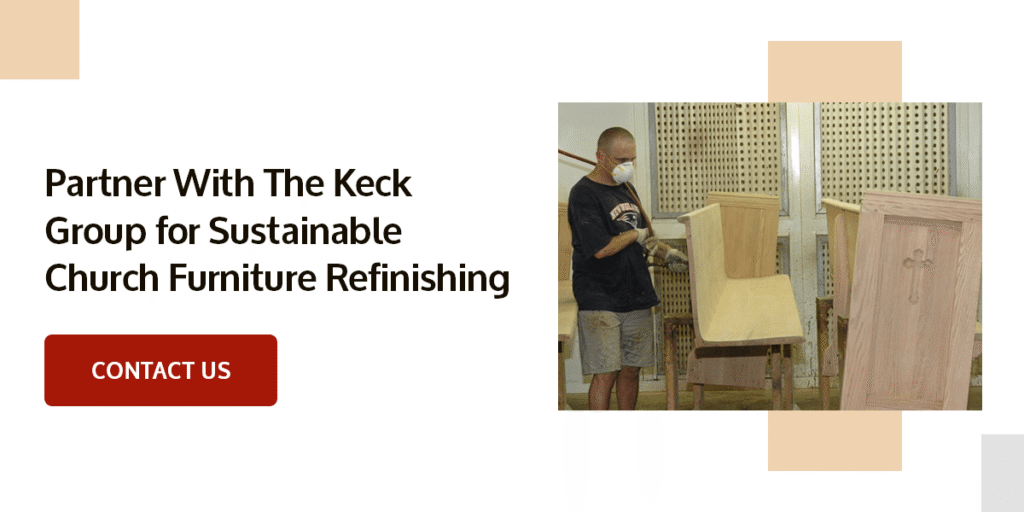
Partner With The Keck Group for Sustainable Church Furniture Refinishing
When you choose refinishing over replacement, you make a decision that preserves history and demonstrates fiscal wisdom. Since 1972, The Keck Group has been helping churches make this sustainable choice, with over 3,200 religious facilities trusting us with their church pew refinishing and restoration needs.
Experience the Keck difference — we deliver the best quality craftsmanship with the shortest turnaround at the fairest price in the industry. Our state-of-the-art refinishing facility ensures your church furniture receives exceptional care while minimizing environmental impact. We work directly with church leaders from start to finish.
Ready to make the environmentally responsible choice for your church? Request a consultation today, or contact our team to discuss your project.